
The Fulbright Experience
As a Fulbright Scholar through the the Fulbright-Nehru International Education Administrator’s program in India, I had the opportunity to engage deeply with India’s evolving higher education landscape. Over two intensive weeks in four cities, 15 institutional visits, policy discussions, and cross-cultural exchange, this experience expanded my understanding of global education systems in India and strengthened my commitment to advancing meaningful internationalization.
Together, these experiences provided a comprehensive view of a system actively evolving to meet both national and global demands. This was not simply a professional development experience; it was a transformative opportunity to examine higher education through a global lens, challenge my assumptions, and reimagine how we prepare students for an interconnected world.
Across India: A National Perspective on Higher Education
My Fulbright experience spanned multiple regions of India, each offering a distinct lens into the country’s educational, cultural, and economic diversity. From national policy conversations across Delhi to innovation hubs in Coimbatore and globally connected institutions in Mumbai, I witnessed firsthand how geography, history, and industry shape institutional priorities.
Each city revealed a different dimension of India’s higher education system:
- Policy and governance at the national level
- Private sector influence and global partnerships in major metros
- Technology and workforce alignment in innovation centers
- Regional diversity and access across emerging institutions

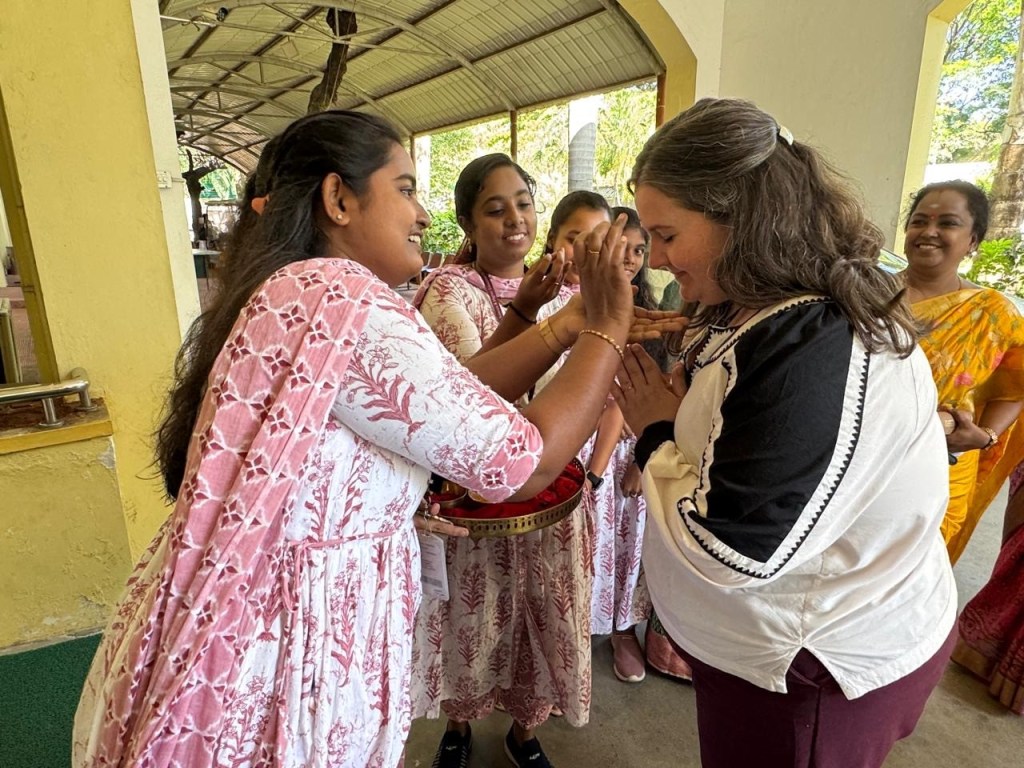
Institutions Shaping India’s Global Future
Throughout the program, I visited a range of universities that are redefining higher education in India. While each institution is unique, several shared themes emerged: a commitment to interdisciplinarity, strong industry partnerships, and a growing emphasis on global engagement.
At multiple institutions, I observed:
- A shift toward four year, interdisciplinary curricula
- Continued focus on career readiness and applied learning
- Strategic efforts to expand international partnerships and mobility
- Innovation in aligning academic programs with workforce needs
A key component of my experience was exploring India’s National Education Policy (NEP 2020), a sweeping reform effort aimed at transforming the country’s education system.
NEP 2020:
- NEP formalized what was already being done at some institutions
- NEP means now dual and joint degrees are possible
- Foreign institutions are not allowed to offer online degrees in India
- The transition to the 4 year degree is taking time in some states, more immediate in others
I observed the complexity of implementation. Institutions are navigating the balance between vision and infrastructure, adapting reforms to their unique contexts while working toward national goals. What stood out most was not just the ambition of the policy, but its visible influence on institutional strategy and decision-making. T
Learning Through a Global Cohort
One of the most impactful aspects of the Fulbright experience was the cohort itself. Engaging with a diverse group of professionals across disciplines, institutions, and perspectives created a dynamic learning environment that extended far beyond formal site visits. We were a travelling peer mentor group, learning and growing through sharing our perspectives and experiences.
Through ongoing dialogue, reflection, and shared experiences, I was challenged to:
- Reconsider my assumptions about higher education systems
- Engage with perspectives outside my field and context
- Think more critically about my own leadership and practice
The cohort was not just a group of participants; it was a space for intellectual growth, collaboration, and meaningful exchange that continues to influence my work.
The Power of Fulbright
The Fulbright experience is grounded in a simple but powerful idea: that mutual understanding across cultures can create a more connected and collaborative world.
For me, Fulbright was not just about learning about another country—it was about learning with others, in ways that are immersive, complex, and deeply human.
This experience strengthened my belief that:
- Global engagement is essential to higher education
- Cross-cultural exchange fosters innovation and empathy
- Relationships are the foundation of meaningful international partnerships
Fulbright creates space for these connections to happen—and their impact extends far beyond the duration of the program.
Key Lessons from My Fulbright Experience
- Global education is shaped as much by policy and systems as by programs
- Internationalization must be context-specific, not one-size-fits-all
- Strong partnerships are built on relationships and trust, not transactions
- Flexibility and interdisciplinarity are defining the future of higher education
- Cultural intelligence is a core leadership competency in a global context

